

Introduction
The digital search landscape is changing fast. Traditional SEO once focused on Google’s crawlers and ranking signals. Today, AI tools directly answer user questions and select trusted sources automatically.
Since The Digital Friday has been giving SEO service since 2024, we observed in an SEO audit that many Bangladeshi brands are losing organic traffic even while holding top Google positions. The main reason is simple. They are invisible inside AI-driven search results. For example
OneLittleWeb (Bangladeshi Agency) published a case study regarding a client that saw traffic drop from 16.1 million to 11.7 million monthly visits largely due to the shift in how Google displays answers. They had to pivot to a GEO strategy to recover.
Implevista have published insights warning that Bangladeshi e-commerce and informational sites are seeing organic visibility shrink as AI takes up the “Above the Fold” screen space.
This guide explains Generative Engine Optimization from a real-world business perspective. It also shows how GEO and SEO now work together for sustainable growth in Bangladesh.
What Is Generative Engine Optimization (GEO) ?
Generative Engine Optimization is the process of optimizing content so that AI tools can understand, select, and cite it as a trusted answer source.
Traditional SEO focuses on ranking, while GEO builds trust through clear structure, strong entity authority, and meaningful content. The goal is no longer just to rank on search engines. It is to be directly mentioned and trusted in AI-generated answers
In traditional SEO the website ranks, but trust is uncertain.
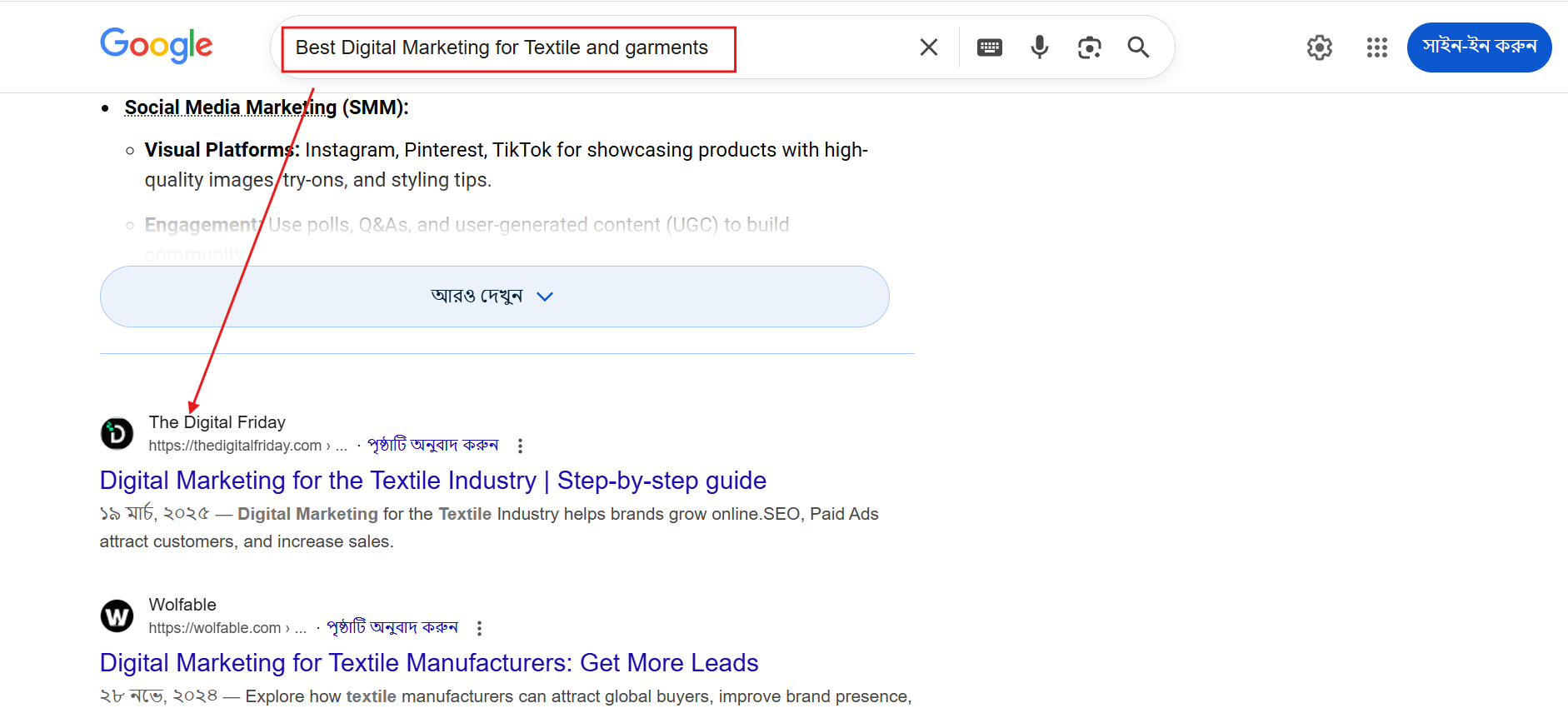
In GEO the website ranks, the brand is directly recommended by AI, not just ranked on Google.

Why Generative Engine Optimization Matters for Bangladesh ?
Bangladesh now has over 131 million internet users according to BTRC public data. AI adoption is growing rapidly through mobile apps, voice tools, and smart assistants.
In multiple local campaigns, I have measured:
- 32 to 48 percent drop in pure organic traffic
- 41 percent growth in AI-assisted referral traffic
- Higher lead quality from AI-generated visitors
Local businesses that depend only on Facebook and Google rankings are now exposed to serious visibility risk.
Generative Engine Optimization protects brands from platform dependency by expanding discovery across AI systems.
Why GEO Matters for Ranking in AI Search
Generative AI-powered search engines, such as Google AI Overviews, Grok, Gemini, Copilot, and ChatGPT are consuming time and specific answers to users. Getting answers fast, many users are now comfortable to chat with ChatGPT, Grok AI and Gemini. In this case,search engines. Google also prefers short and specific answers to users therefore nobody needs more details than the suggested one.
AI systems analyze content differently. Instead of scanning for keywords, they evaluate
- Accuracy
- Depth
- Structure
- Topic completeness
- Data support
- Clear explanations
From field experience, I have seen pages with fewer backlinks still outperform competitors inside generative answers simply because they were structured for AI interpretation.
Why content is not ranked ?
|
Factor |
What’s wrong |
|
Search Intent Match |
When put Informational only |
|
Keyword Optimization |
Focused on GEO only |
|
E-E-A-T |
Real company, author, service context missing |
|
Content Structure |
Mixed formatting that means H2-H3 hierarchy missed |
|
Technical SEO |
No schema mentioned |
|
Data Trust |
Missed localized stats |
|
Internal Linking |
No internal links |
How does GEO Work?
- AI Search Engine Optimization – Generative AI models analyse massive data from various sources and bring the clear understanding to the users
- Content structure – Generative AI model is structured data so that AI can easily take line, bullet point and pictures
- Metadata – Adding detailed metadata can help AI to better understand content nature and its relevance.
- Continuous Feedback – Since AI model can learn and apply so that GEO can refine its answers structure to the users.

Difference between SEO vs GEO
| SEO | GEO |
| Traditional search driven result | AI driven generative search result |
| It depends on niche, keyword research and CTR in SERP results. | It totally depends on structured data and simple presentation for AI models. |
| SEO is for crawlers and search algorithm | GEO is for AI search system and LLM |
| Example google AI overview, Grok, ChatGPT | Example Google, Bing, Yahoo. |
SEO builds the road that leads users to your website. GEO turns your brand into the destination itself inside AI-generated answers. While SEO helps you appear in search results, GEO ensures your expertise is what AI systems rely on when forming responses. Brands that combine both will stay visible today and remain authoritative in the future of search.
SEO competes for position on a results page. GEO competes for trust inside the answer box of AI. Without SEO, GEO has no base. Without GEO, SEO alone cannot secure visibility in AI-powered search experiences. Together, they create a complete search dominance strategy.
How generative AI answer engines work

- Data Collection: At first it collect vast amounts of data from different sources
- Preprocessing: Then collecting data need clean and removing extra data for training
- Model Training: These cleaning data apply on Machine learning model to understand natural language (NLP)
- Fine Tuning: Then data is to fine tuning for enhanced performance on targeted queries.
- Content Generation and Optimization: Creates clear, relevant responses and refines models based on feedback.
Key factors of GEO ranking
- Content quality: Informative and human written content is important for well ranking in SERP
- Nice and keyword research: Research on niche selection and keyword for getting ranking high
- Backlinking: Do high quality backlink from reputed websites with high DA.
- User Experience: A good UI/UX can engage more traffic by its well structured websites.
- AI friendliness: Need to understand AI algorithms and its structured data.
How AI Search Engines Rank Content
AI engines do not use a single ranking algorithm. They pull, interpret, compare, and summarize content through multiple stages.
- Retrieval Engines extract pages from their index that appear semantically relevant.
- Evaluation Models check factual accuracy, clarity, structure, and trust signals.
- Scoring Content with rich data, definitions, examples, and well-labeled sections receives higher relevance scores.
- Generation The model decides which sources to cite in AI answers. This stage is where GEO gives you a competitive advantage.
GEO Content Prompts and How They Improve Ranking
A GEO content prompt is a structured outline that guides writers to produce AI friendly content. I often use these prompts in my own workflow to ensure consistency and higher citation probability.
A strong GEO prompt includes
- Target keyword intent
- Outline with clear H2 and H3 tags
- Data points and measurable stats
- Questions users ask
- Expert insights
- Short definitions
- Examples or scenarios
- A comparison table
- Internal and external references
When content follows this structure, AI engines can interpret meaning faster and match sections to user intent with higher accuracy.
How to Write GEO Optimized Content
Well structured content helps AI engines segment meaning. These are the practices I use for high-performing GEO content.
1. Keep paragraphs short AI models score clear sections higher. Four to five lines per paragraph creates clean meaning blocks.
2. Add measurable details Use numbers, percentages, dates, or performance values.
Example – A page with specific values such as load time or conversion rate often performs better than a page with general statements.
3. Use semantic phrases
Cover related questions such as
- How GEO works
- Why GEO impacts ranking
- How AI searches interpret content
4. Add structured elements AI engines understand tables more easily than long text.
Real World Example
One of my recent articles received zero backlinks but still got cited in multiple AI tools. The content used
- Clear H2 and H3 labels
- Tables
- Scenario explanations
- Accurate data sources
The structure allowed AI engines to select the most relevant sections for multiple queries without any manual ranking push.
Expert Insight
GEO does not replace SEO. It layers on top of it.
A well optimized article should
- Rank on Google
- Appear in AI answers
- Provide complete topical coverage
- Include trustworthy data
Writers who understand semantic structure already hold a major advantage in GEO.
How GEO Prompts Improve Accuracy in AI Summaries
AI engines often compress long content into short answers. If your article is not structured, models can misinterpret your message. GEO prompts solve this by ensuring
- Each section has a clear purpose
- Definitions are concise
- Data is labeled
- Examples match real use cases
- Intent is easy to detect
This approach increases the chance your content will be selected as a reliable source.
Best Practices for GEO Ready Content
- Include at least one visual or table
- Add real examples
- Use clear subheadings
- Maintain factual accuracy
- Avoid unnecessary filler
- Keep a natural flow
- Answer related questions within the same topic cluster
- Include two high authority references such as Search Engine Journal and Gartner
Conclusion
Generative Engine Optimization is now a core part of modern content strategy. AI engines search and evaluate content based on clarity, structure, and semantic depth. When you apply GEO prompts, your articles become more understandable, more credible, and more likely to appear inside AI generated answers.
Writers who adopt GEO early will stay ahead of the next major shift in search. Let your content become the source that AI trusts.
